
Introduction
Launching an industrial puzzle manufacturing plant requires systematic planning across factory layout, equipment investment, staffing, and standardized operations, differing vastly from small-scale home puzzle production. This B2B-focused guide is tailored for toy industry investors, OEM startup founders, and industrial procurement specialists looking to build a scalable, profit-driven puzzle production business. It covers all core industrial setup procedures, from market validation and site planning to equipment configuration, raw material management, and quality control systems. By focusing solely on commercial factory establishment and operational best practices, this resource helps new manufacturers avoid costly startup mistakes, optimize capital allocation, and build a stable, high-efficiency industrial puzzle production system suitable for bulk OEM and wholesale orders.
Market Opportunity for Industrial Puzzle Manufacturing
The global commercial puzzle market maintains steady expansion, driven by corporate promotional orders, educational toy demands, and retail customized puzzle lines. For newly launched manufacturing facilities, B2B bulk cooperation and OEM customized projects deliver far more stable revenue than small-batch retail sales. Industrial puzzle factories stand out through consistent output capacity, uniform product quality, and flexible order adaptation capabilities, which are key factors for securing long-term partnerships with brands and distributors. Strategic factory zoning and optimized deployment of puzzle-making machines serve as core competitive advantages for emerging manufacturers in the crowded industrial market.
Factory Space & Layout Planning (Industrial Standard)
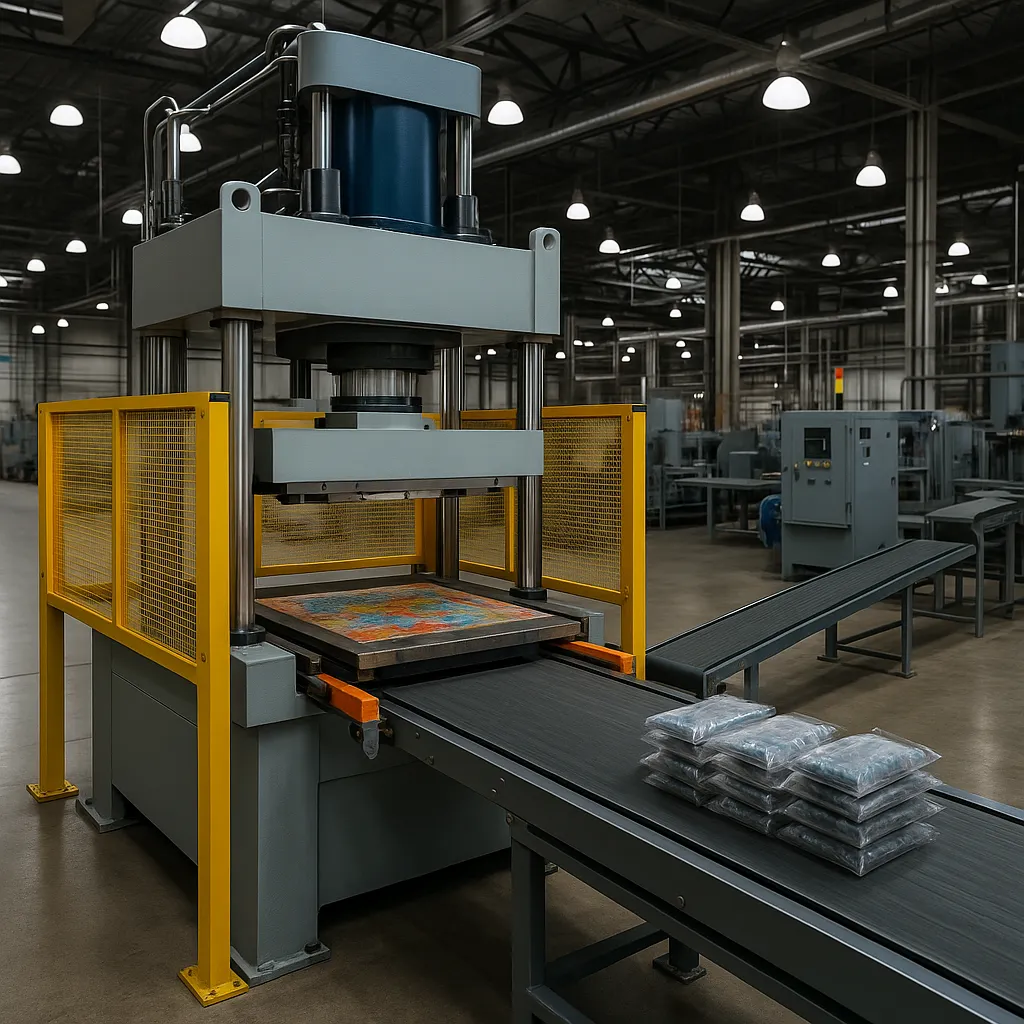
Scientific factory space arrangement lays the foundation for efficient industrial puzzle production. New manufacturing plants must divide independent functional zones to streamline operational workflows, including dedicated raw material storage, core production areas, finished goods warehousing, and quality inspection offices. A beginner industrial production line requires 150 to 300 square meters of standardized space, while large-scale mass production configurations demand over 500 square meters to eliminate workflow bottlenecks. Critical layout best practices include functional zone separation for operational safety and material preservation, reserved installation and maintenance space for automated puzzle production systems, and optimized internal logistics routes to cut operational costs. This section excludes construction technical details and focuses purely on production-oriented industrial layout standards.
Industrial Puzzle Manufacturing Equipment Investment
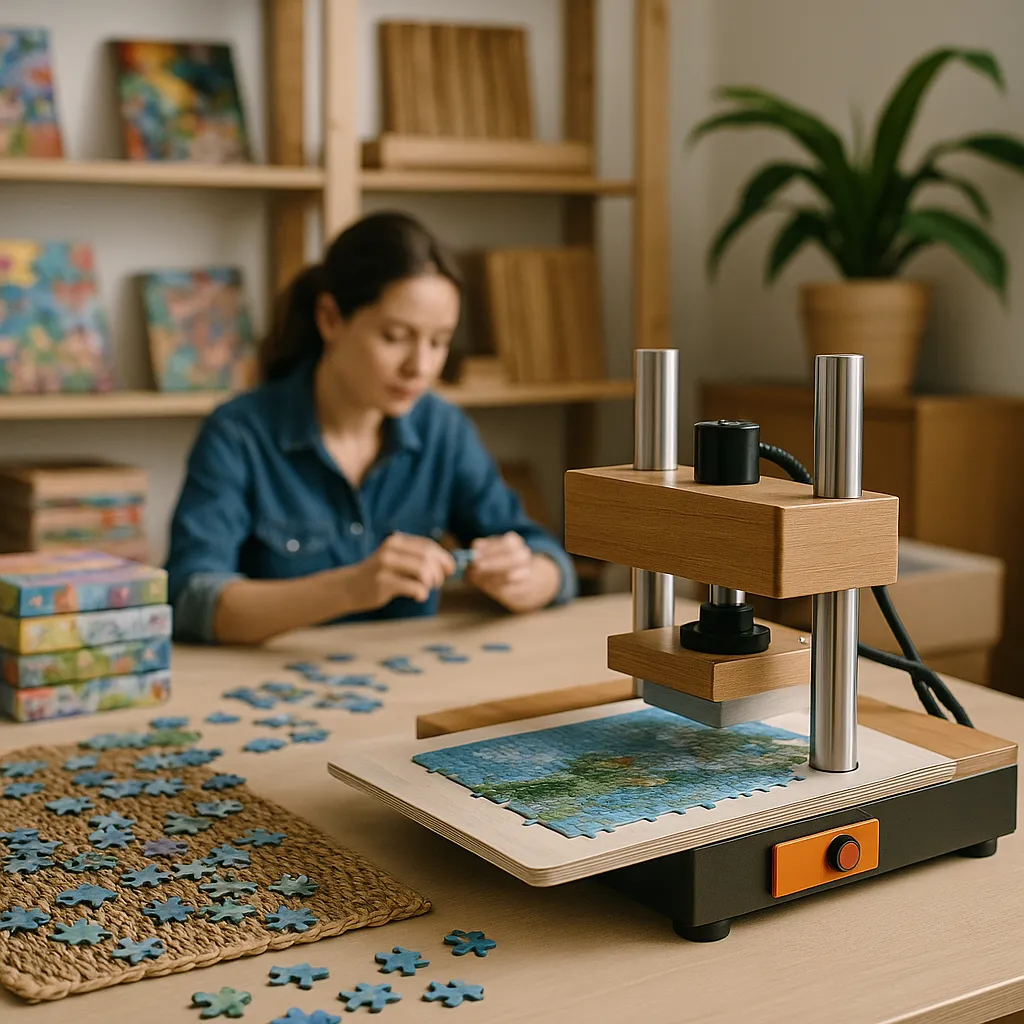
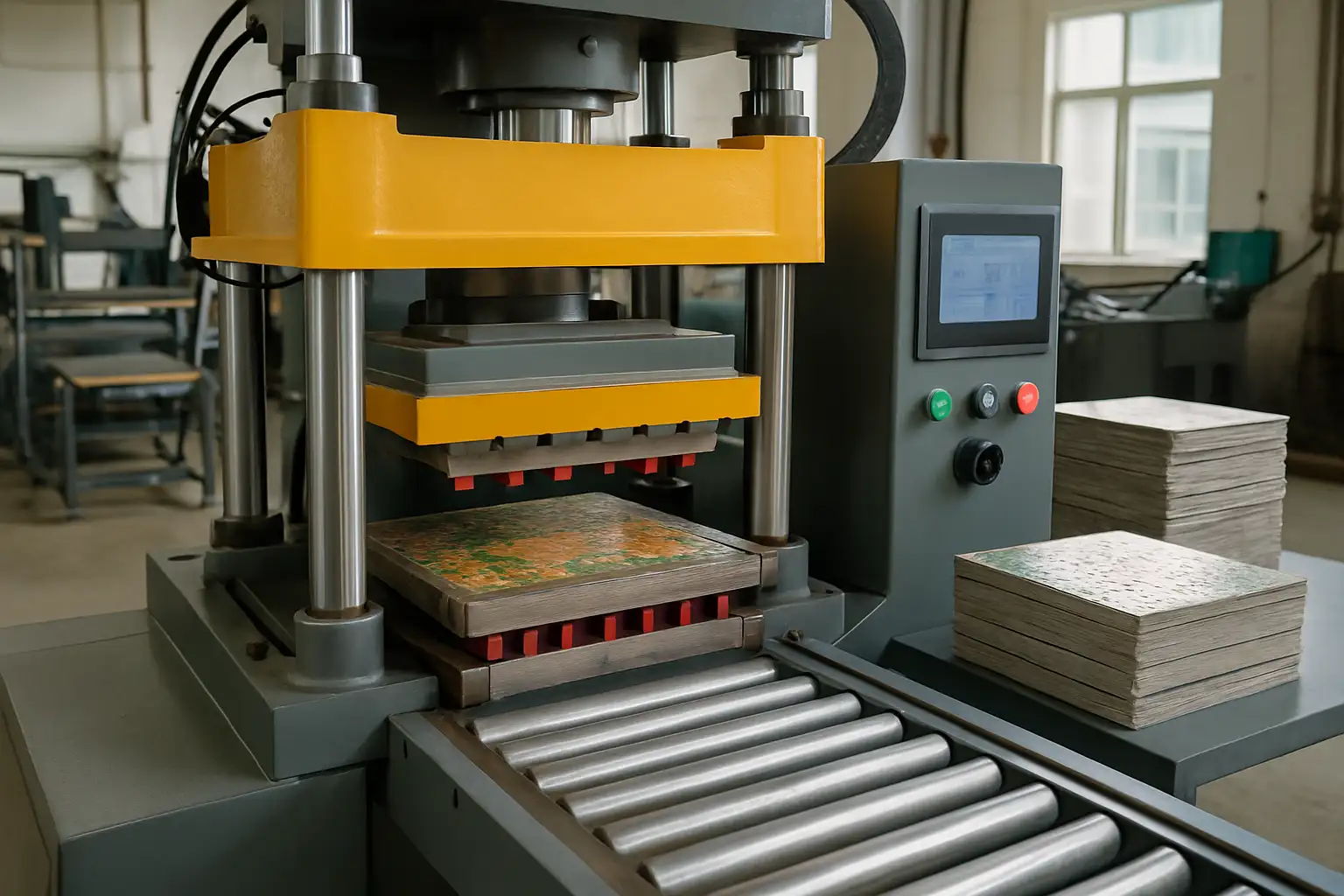
Production equipment accounts for the largest proportion of initial capital investment for puzzle factory startups, directly defining production capacity, product uniformity, and overall profit margins. Industrial-scale puzzle production relies on matched sets of professional puzzle-making machines to complete standardized production procedures, with no in-depth exploration of complex die-cutting engineering principles. Investors can select tiered equipment solutions based on actual order volume: semi-automatic units for small and medium OEM batches, and fullautomated puzzle production systems for high-volume mass manufacturing. Key investment evaluation criteria include equipment compatibility with mainstream puzzle manufacturing materials, reliable after-sales support, energy efficiency performance, and future upgrade flexibility. Startups are advised to avoid excessive upfront investment in high-capacity equipment that exceeds early-stage operational demands.
Raw Material Procurement Strategy for Mass Production
Sustainable supplier cooperation and scientific raw material management guarantee uninterrupted industrial production and stable product quality for puzzle factories. New manufacturers need to screen qualified long-term suppliers for core production materials, including industrial-grade puzzle cardboard, eco-friendly adhesive agents, high-definition printing coatings, and supporting auxiliary parts. This section focuses entirely on industrial procurement and inventory management strategies, covering bulk purchasing cost control, supplier qualification audits, batch material consistency verification, and safety stock preparation for peak order seasons. It avoids professional material science analysis and only delivers actionable operational guidance for factory startup teams.
Staffing Configuration & Team Setup
Industrial puzzle manufacturing requires a streamlined, role-clear team structure adapted to production scale. A standard startup factory team consists of frontline production operators, professional quality inspectors, warehouse management staff, and B2B business coordinators. Semi-automatic production lines require 3 to 5 on-site operators per working shift, while fully automated production setups minimize labor dependence, only needing 1 to 2 staff for real-time equipment monitoring. Optimal staffing strategies for startups include prioritizing candidates with industrial manufacturing experience, building standardized post training mechanisms, and clarifying job responsibilities for production supervision and quality auditing to reduce manual operational errors.
Industrial Production Workflow Planning
Standardized, streamlined production workflows are essential for stable daily operation and scalable development of puzzle manufacturing factories. The complete industrial production workflow includes order confirmation, material preparation, digital printing processing, mechanical shaping, quality screening, and finished product warehousing. This guide centers on overall workflow scheduling, production cycle management, and capacity matching strategies, without involving intricate die-cutting techniques or detailed packaging procedures. Adopting matureautomated puzzle production systems enables new factories to standardize every production link, shorten order delivery cycles, and flexibly switch between customized OEM orders and bulk mass production tasks.
Factory Quality Control System Setup
A systematic quality control framework is indispensable for B2B OEM cooperation and long-term brand credibility of industrial puzzle factories. Manufacturers must implement full-link quality inspection mechanisms throughout production, including sampling checks for incoming raw materials, random inspection of semi-finished products during processing, and comprehensive appearance and dimensional detection of finished goods. Unified quality standards covering puzzle piece uniformity, printing clarity, and edge flatness need to be strictly enforced in daily production. Robust QC systems effectively reduce product rejection rates, improve client reorder willingness, and help newly established factories quickly build market recognition in the industrial puzzle manufacturing industry.
Startup Cost & Long-Term Investment Considerations
The total startup expenditure for an industrial puzzle factory covers core items including equipment procurement, factory rental and renovation, raw material reserve, team staffing, and daily operational overheads. Operational costs are divided into variable expenses such as material consumption and labor salaries, as well as fixed expenses including equipment maintenance and factory daily operation fees. Practical investment strategies for startups include phased equipment upgrading aligned with business growth, rational initial inventory cost control, and sufficient working capital reservation to cover B2B order fund cycles. Scientific cost planning effectively accelerates the factory’s break-even progress and enhances long-term operational profitability.
FAQ for Puzzle Manufacturing Factory Startups
Q1: What core equipment is mandatory for a newly built industrial puzzle factory? A: Basic industrial production configurations require core puzzle-making machines including professional printing devices, puzzle forming equipment, and piece sorting machines; enterprises pursuing high-efficiency mass production need a complete set of automated puzzle production systems.
Q2: How much factory space is needed for initial industrial production? A: 150–300 square meters is sufficient for small-batch OEM production; scalable mass production requires 500+ square meters of standardized factory space.
Q3: How to optimize raw material costs for large-batch puzzle manufacturing? A: Enterprises can secure long-term supplier partnerships for bulk purchase discounts, match puzzle manufacturing materials specifications with equipment operating parameters, and optimize inventory turnover efficiency to reduce material waste and cut production costs.
Q4: What core benefits do automated production setups bring to puzzle factory startups? A: Automated production systems stabilize product quality consistency, boost overall production efficiency, lower long-term labor costs, and fully meet the standardized quality and delivery requirements of large-scale B2B OEM orders.
Conclusion
Building a profitable and sustainable commercial puzzle manufacturing factory relies on scientific site planning, cost-effective puzzle-making machines investment, standardized operational management, and stable supply chain deployment. By dynamically matching equipment automation level, factory scale, and human resource allocation with market order demands, new OEM puzzle manufacturing startups can achieve stable operational growth, capture high-value B2B market resources, and build solid long-term competitive barriers in the industrial puzzle production sector.