
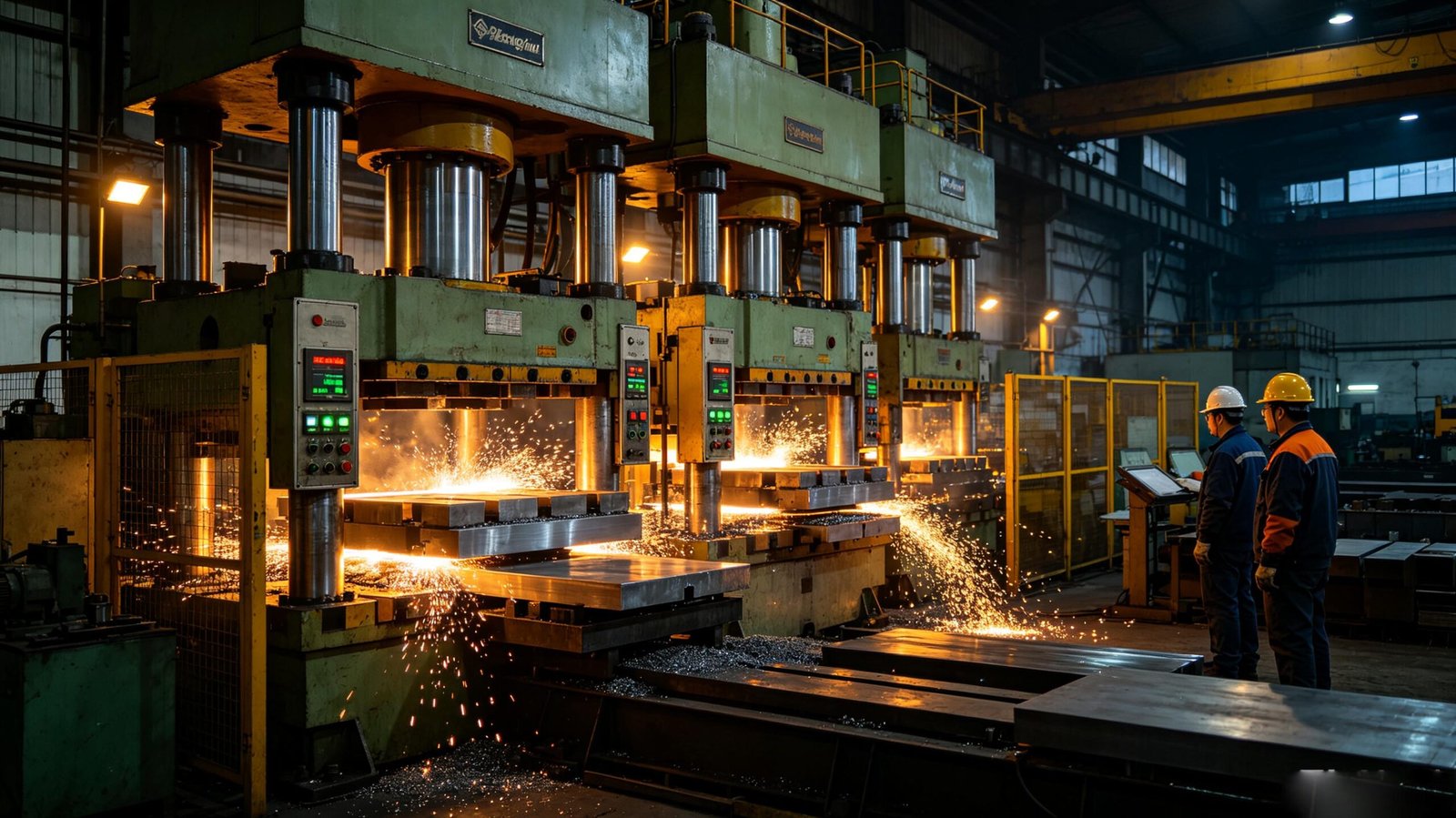
For manufacturing plant owners, industrial procurement teams, and production managers, choosing the right servo press equipment directly impacts production consistency, output efficiency, and long-term operational costs. Electric servo presses and servo hydraulic presses are the two leading precision forming solutions for modern industrial stamping and mass manufacturing. While both deliver reliable servo-controlled pressing performance, they vary greatly in footprint requirements, upfront investment, continuous production capability, and routine maintenance needs. Poor equipment matching often leads to unstable product quality, reduced throughput, and unnecessary operational losses for new production facilities. This industrial comparison guide breaks down the core differences between electric servo presses and servo hydraulic presses to help factories make data-backed procurement and production planning decisions.
Enterprise Application Positioning for Two Industrial Press Types
The fundamental distinction between electric servo presses and servo hydraulic presses lies in their driving structure and power output mechanism, which defines their ideal industrial manufacturing scenarios. Electric servo presses adopt a full-electric direct-drive and ball screw transmission system, requiring no hydraulic oil, pipelines, or auxiliary hydraulic components. This structure delivers compact installation, clean operation, and high repeat positioning accuracy, making it ideal for standardized, high-precision, and high-consistency batch forming production. In comparison, servo hydraulic presses integrate precise servo motor control with traditional hydraulic transmission, providing heavy forming tonnage and superior pressure endurance. They are well-suited for thick material stamping, large-scale component forming, and continuous high-load industrial production environments. For new manufacturing enterprises, clarifying equipment application positioning is essential to avoid excessive investment, capacity redundancy, or insufficient production output.
Factory Layout & Infrastructure Adaptation
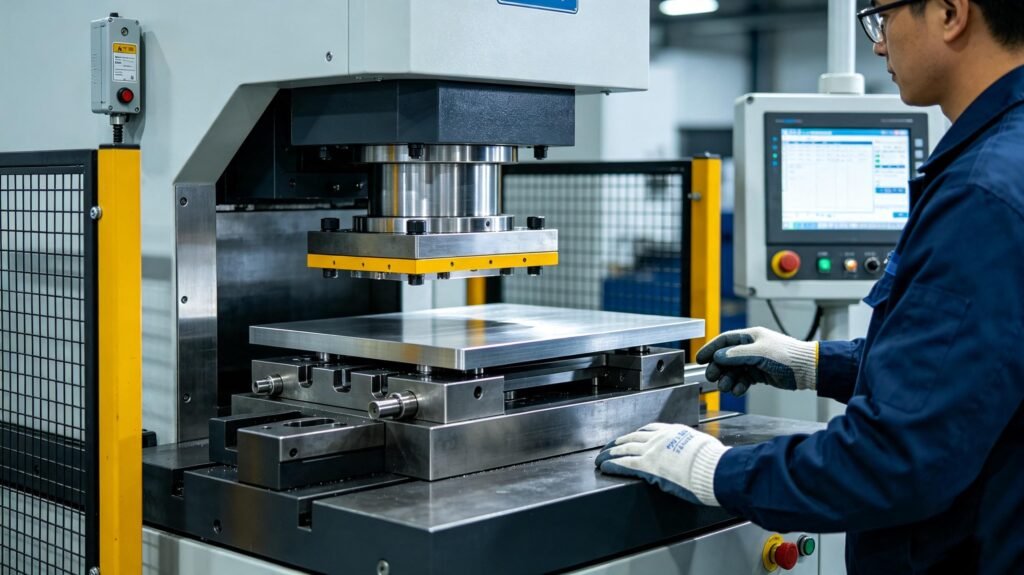
Scientific factory planning and infrastructure matching directly determine production line flexibility and early-stage plant renovation costs. Electric servo presses feature an integrated, compact mechanical design with no supporting hydraulic stations, heat dissipation systems, or complex pipeline layouts. The equipment occupies minimal floor space and supports flexible production line combination and layout adjustment, perfectly matching small and medium-sized industrial plants with limited workshop area and clean production standards. With low vibration and low noise operation, full-electric servo presses fully comply with modern industrial environmental specifications, eliminating oil leakage, ground contamination, and fluid maintenance risks.
Servo hydraulic presses require independent hydraulic station installation, dedicated heat dissipation zones, and reserved space for oil circuit layout and pipeline maintenance, demanding larger fixed workshop areas and reinforced industrial ground bearing capacity. Plants equipped with servo hydraulic presses must reserve exclusive equipment maintenance passages and hydraulic fluid storage areas, increasing early-stage factory planning and renovation investment. However, these layout costs are reasonable and worthwhile for large-scale industrial manufacturing bases focused on long-term, high-load, heavy-duty stamping and forming production.
Investment Cost & Financial Planning
From industrial project investment and cost-control perspectives, the two press models present completely different capital expenditure and long-term return cycles. Electric servo presses usually carry slightly higher upfront equipment procurement costs due to precision servo motors and high-grade transmission components. Nevertheless, they require no hydraulic oil replacement, pipeline maintenance, or fluid treatment, resulting in extremely low long-term operational and consumable costs. This makes electric servo presses a cost-effective choice for medium and high-value precision component mass production with stable long-term order volume.
Servo hydraulic presses feature lower initial purchasing costs and mature structural technology, lowering the threshold for early-stage factory construction. However, they generate continuous recurring expenses, including regular hydraulic oil replacement, seal component updates, pipeline cleaning, and hydraulic station maintenance. For heavy industrial production plants with large tonnage forming demands and sufficient profit margins, the lower upfront investment of hydraulic servo presses delivers better short-term capital flexibility, while long-term operational costs must be fully included in project budget assessment.
Mass Production Planning & Output Stability
Production stability and scheduling flexibility are core indicators for industrial equipment selection. Electric servo presses support precise stroke, speed, and pressure digital adjustment, enabling highly standardized and repeatable forming actions. The consistent machining accuracy drastically reduces defective rates, making them suitable for high-precision batch production, customized small-batch orders, and flexible mixed-line manufacturing. The full-digital control system also simplifies production data monitoring, helping factories realize intelligent production scheduling and output management.
Servo hydraulic presses provide stable ultra-high pressure output and strong impact resistance, adapting to complex forming processes and thick material compression that electric models cannot handle. Although their precision repeatability is relatively moderate, they excel in heavy-load continuous operation and complex process production. For factories focusing on standardized heavy stamping and large-scale batch production, servo hydraulic presses maintain stable output efficiency under long-duration high-load working conditions.
Operational Setup & Daily Maintenance Management
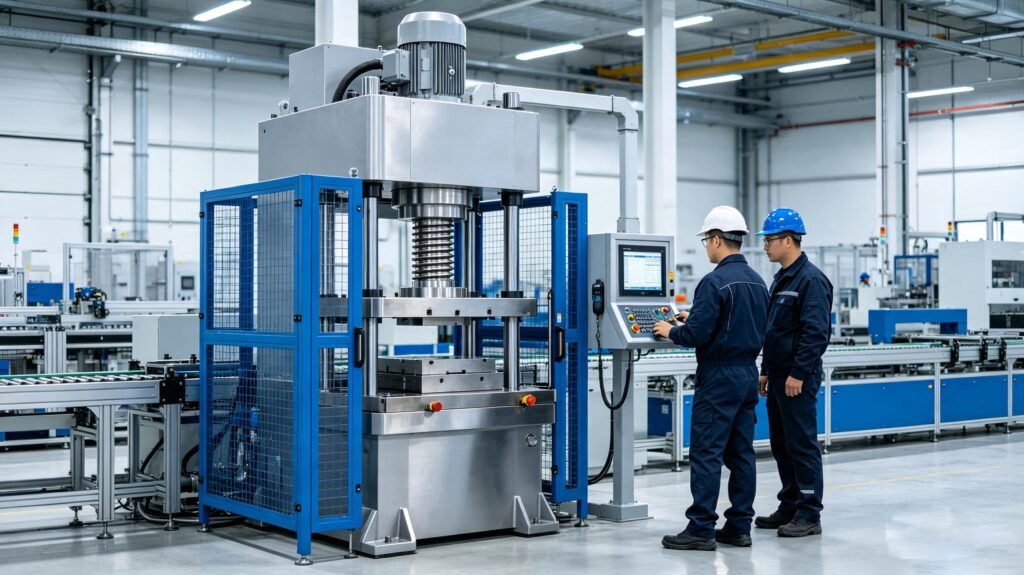
In terms of daily factory operation, electric servo presses feature simpler operational settings and lower maintenance thresholds. The fully electric structure eliminates hydraulic system failures, oil leakage failures, and pipeline blockage risks. Factory operators only need to perform regular lubrication and electrical system inspections, reducing daily maintenance labor costs and production downtime. The intelligent control system also supports parameter memory and one-click production switching, improving overall operational efficiency for flexible production lines.
Servo hydraulic presses require standardized daily maintenance systems, including hydraulic fluid level inspection, oil quality testing, seal wear detection, and heat dissipation system debugging. Manufacturing plants using hydraulic servo equipment need to arrange dedicated maintenance personnel for regular system debugging to avoid pressure instability and oil leakage failures. Although the operation process is relatively complicated, standardized maintenance workflows can effectively extend equipment service life and ensure stable long-term production.
Conclusion
Choosing between an electric servo press and a servo hydraulic press depends entirely on a factory’s production positioning, infrastructure conditions, investment budget, and long-term operational planning. Electric servo presses are ideal for precision-focused, clean, flexible, and low-consumption industrial mass production scenarios, suiting medium and small manufacturing plants and high-precision component production lines. Servo hydraulic presses are more suitable for heavy-load, large-tonnage, and thick-material forming production, matching large-scale heavy industrial manufacturing bases with sufficient budget reserves and standardized maintenance systems. Reasonable equipment selection helps industrial factories optimize production efficiency, control operational costs, and build stable and scalable standardized production systems.